
May 2012. I landed in Ho Chi Minh City on a one-way ticket.
My job, my apartment — everything I had in Japan, I’d sold off or given away.
Looking back, it was a reckless move. But strangely, I don’t remember hesitating.
I do remember the moment I stepped out of the airport, though.
Motorbikes. Motorbikes everywhere, a flood of them in every direction.
“Can I actually survive in this chaos?” Honestly, that was my first thought.
Back in Japan, the iPhone 4S was still the newest iPhone. The mobile app boom was in full swing, and everywhere in the industry you heard the same two lines: “We don’t have enough engineers” and “We can’t slow down.” The subcontracting pyramid that Japanese software development ran on looked, to me, like it had hit its limit.
Meanwhile in Ho Chi Minh City, the government was giving software companies a four-year tax exemption, and young engineers were founding startups one after another. The whole city hummed with the same conviction: the future here would be built by the people living in it.
On a scouting trip shortly before the move, I felt that energy firsthand and had one clear thought: this is where a new way of building software could start.
But I’ll admit, I brought one big misconception along with my suitcase.
The quality standards and project management style I’d learned in Japan: I assumed those would transfer as-is. That I’d be the one doing the teaching.
This is the story of how that assumption fell apart.
The interpreter was the last position I filled
I had no staff. Not one person.
Step one was posting a job ad on VietnamWorks, the local job board. I barely spoke English at that point, let alone Vietnamese, so my plan was to hire an interpreter first, just so I could run interviews. A fairly precarious way to start a company.
Funny thing: developers were easy to find.
The one role that stayed empty until the very end was the interpreter.
What finally solved it: I remembered a Vietnamese woman I’d met in Roppongi, Tokyo, who had once mentioned thinking about moving home. It took a lot of persuading, but she became our interpreter, and the last seat was filled.
Ten desks and six people in their twenties
The original plan was to start with two or three people.
But with a team that small, one resignation puts you back at zero.
So I went the other way and hired six.
The office was in District 7, the polished, modern part of the city. “Office” is generous: it was a small room that fit about ten desks.
Everyone was in their twenties. Not much experience yet, but there was a spark in their eyes.
“I want to get better at this.”
“Someday I want to build something that changes things.”
Lines like that came out of them completely naturally, and I caught myself thinking of Japan in the 1980s and 90s, the era when the whole country was obsessed with building things.
Though, looking back: I could only measure the energy in front of me by asking which decade of Japan it reminded me of. That says a lot about how Japanese my yardstick still was.
Our battle cry was “Command + S!”
That office lost power once or twice a week.
So when someone sensed it coming and shouted a warning, everyone hit save at once. Our battle cry in those days was “Command + S!”
On one release day, the office Wi-Fi died completely. It was 2014, and McDonald’s had just opened its first store in Vietnam, so at midnight we packed up our laptops and finished the release from the brand-new first store.
It was ridiculous. But somewhere in that chaos, a real sense that we’d get through things together was taking root.
“Why do Japanese people care about that?”
Our first contract came from the research lab of a major Japanese home-appliance manufacturer: building a display screen for an elevator, in JavaScript.
After we delivered, the Japanese side flagged an issue. The screen was off by one pixel. And one of my Vietnamese engineers asked me, completely straight-faced:
“A one-pixel gap is invisible unless you zoom in. Why do Japanese people care about that?”
I had no answer.
Back in Japan, I had called that “quality” and never once questioned it.
Caring about what nobody can see really is the strength of Japanese craftsmanship. But it took leaving Japan to realize it’s not the world’s standard. It’s Japan’s personality.
And that personality, pointed at the wrong things, stops being quality and starts being a brake on speed.
I had come here to teach. Instead, day after day, Ho Chi Minh City kept making me re-examine my own defaults.
The first time I asked my team for advice
That said, the early days were mostly failure.
What I meant never got through. Rework never ended. The project management playbook I’d brought from Japan barely worked.
Looking back, the problem was a wall I had built myself: me versus the Vietnamese staff. As long as I was trying to manage them, steer them, run them, all I got back were textbook answers.
The turning point came when I heard one of the team might quit.
For the first time, I went to the other members and asked for advice. Not instructions. Just: “What do you think I should do?”
I still remember the air in the room changing.
The same people who had only ever given me safe, textbook responses started talking to me like a teammate, pushing back and suggesting things I hadn’t considered.
Stop directing from above. Share the problem, ask for help.
The moment I made that shift, six individuals became one team.
I had believed teams were built by managing well. That belief broke that day, and I’m glad it did.
One of those six is our CTO today
Among the first six was a fresh graduate: Dang-san.
He’s also, as it happens, the engineer who asked me why Japanese people care about one pixel.
While everyone else went straight home to their families after work, Dang-san was different. I had no friends in the country, and he ate with me, drank with me, walked the city with me. He was my English teacher and, honestly, my Vietnamese brother.
He eventually left the company and went on to work at companies in Australia, Germany, and Japan.
And then he came back.
Today he’s our CTO. The hardest projects we take on, technically and organizationally, are the ones he leads.
One of the six people in that ten-desk office turned out, 14 years later, to be the backbone of the company. Life is funny that way.
A small team built a culture
The company has grown since then. The team that started with ten desks is 25 people now.
But the culture of that blackout-prone office hasn’t changed: share the problem openly, and when something works, yell “AWESOME!” together. Dang-san saw companies in three countries and still chose to come back here. That’s the proof I point to.
If you ever need one question to judge an offshore team by, try that one. Not whether people stay — whether they come back.
To this day, when I ride one of those elevators, I can still see traces of the screen we prototyped, and I feel a little proud.
The team was born the day I stopped trying to move people and started asking them for help instead.
That single lesson from Ho Chi Minh City is the foundation of how we run offshore development today.
If your company is standing where Japan’s development world stood back then — not enough engineers, no room to slow down — maybe what you need isn’t a vendor that takes orders.
Maybe it’s a team that thinks with you. That’s a conversation I’m always glad to have.
If “a team that thinks with you” sounds interesting
Offshore development, team building, or nothing decided yet — all of that is fine. Running a team in Ho Chi Minh City for 14 years taught me a few things that might be useful to you. Treat it as a sounding board, not a sales call.
Book 30 minutes → Send a Message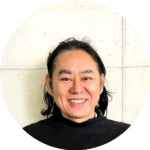
Shogo Harada原田 祥吾
CEO · Linnoedge Inc. · LinkedIn↗
Operating IT offshore development and overseas expansion support businesses across two bases: Tokyo and Vietnam. A leader who believes in “Systems over Spirit,” structuring cross-border businesses that often tend to be opaque. Committed to providing “reproducible quality” to organizations and clients rather than relying solely on individual skills.