
PRODUCT DEVELOPMENT PERSPECTIVE
A sustainable mobile product grows from sound decisions about users, experience, technology, quality, and operations.
A great app is the outcome of an entire system of decisions, not code alone.
When people talk about building a mobile app, the conversation often begins with programming languages, frameworks, or operating systems. Users, however, do not judge a product by its lines of code. They care whether it solves the right problem, feels easy to use, protects their data, and works reliably. Quality therefore takes shape before the first line of code is written and continues to evolve long after release.
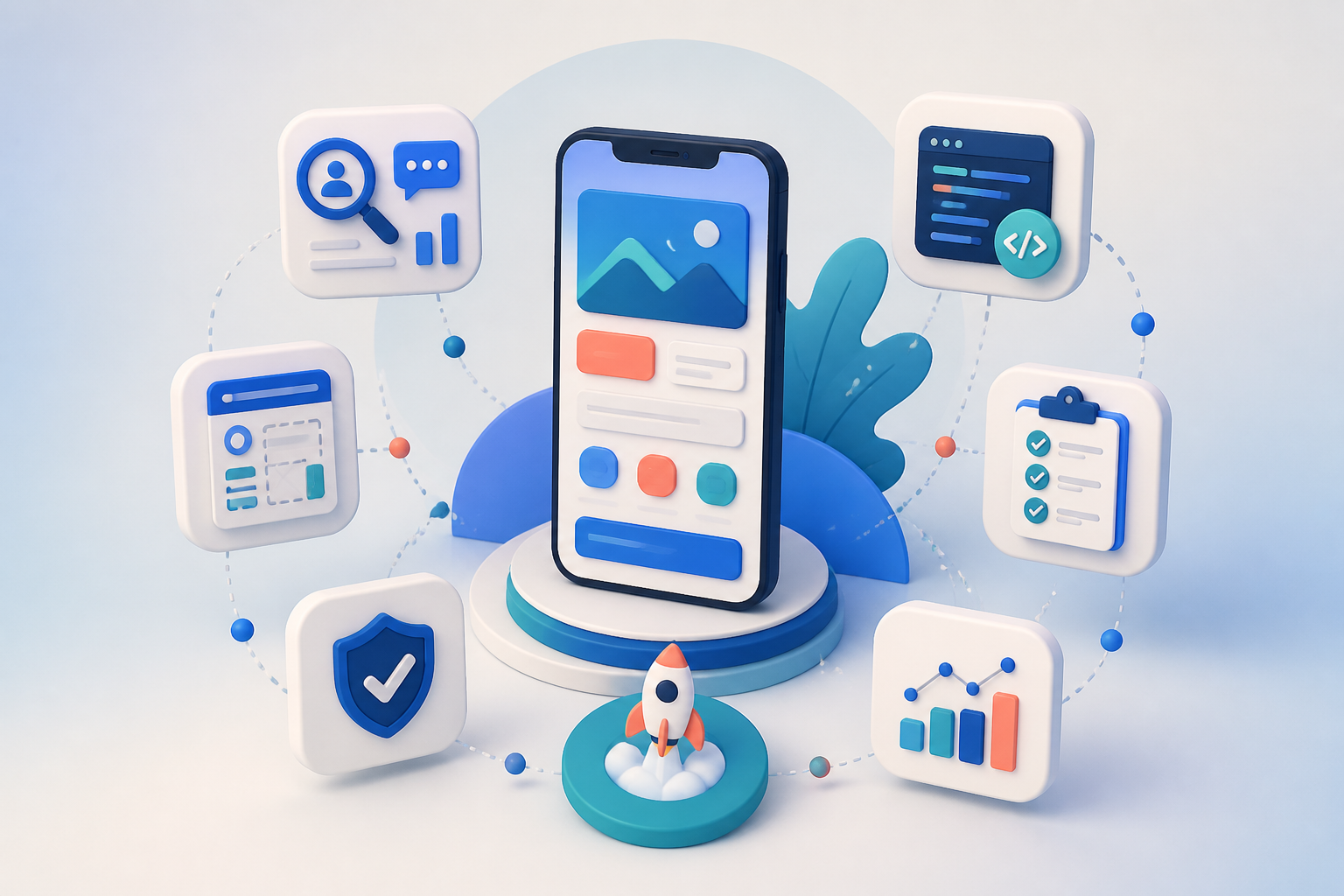
Start with a problem worth solving
An attractive idea is not necessarily a meaningful need. Before designing screens, the team should understand what users struggle with, how they currently deal with it, and what difference the app could make. Interviews, behavioral observation, and small prototype tests are usually far less expensive than discovering after development that nobody needs the feature. This is also the right time to define concrete measures of success.
Keep the first version small enough to learn quickly
An MVP is not a careless product; it is the smallest version capable of testing the core value proposition. Trying to include every idea in the first release slows delivery and dilutes the main experience. Choose one important user journey and make it coherent from beginning to end. Prioritize everything else according to impact, cost, and evidence gathered from real users.
Choose technology for the context, not the trend
Native, cross-platform, and web-based approaches each have strengths. The right choice depends on the intended experience, hardware access, performance, budget, and the team's ability to maintain it. Architecture should clearly separate interface, business logic, and data without becoming more complex than the problem requires. Good technology is technology the team can develop, test, and operate reliably over the long term.
Design for real life, not just the mockup
People may hold the phone with one hand, use it in bright sunlight, get interrupted, or connect through an unstable network. The experience needs clear actions, generous touch targets, and timely feedback. Loading, empty, error, and offline states deserve the same care as the happy path. An interface that looks beautiful in a design file but creates confusion in the real world is still unfinished.
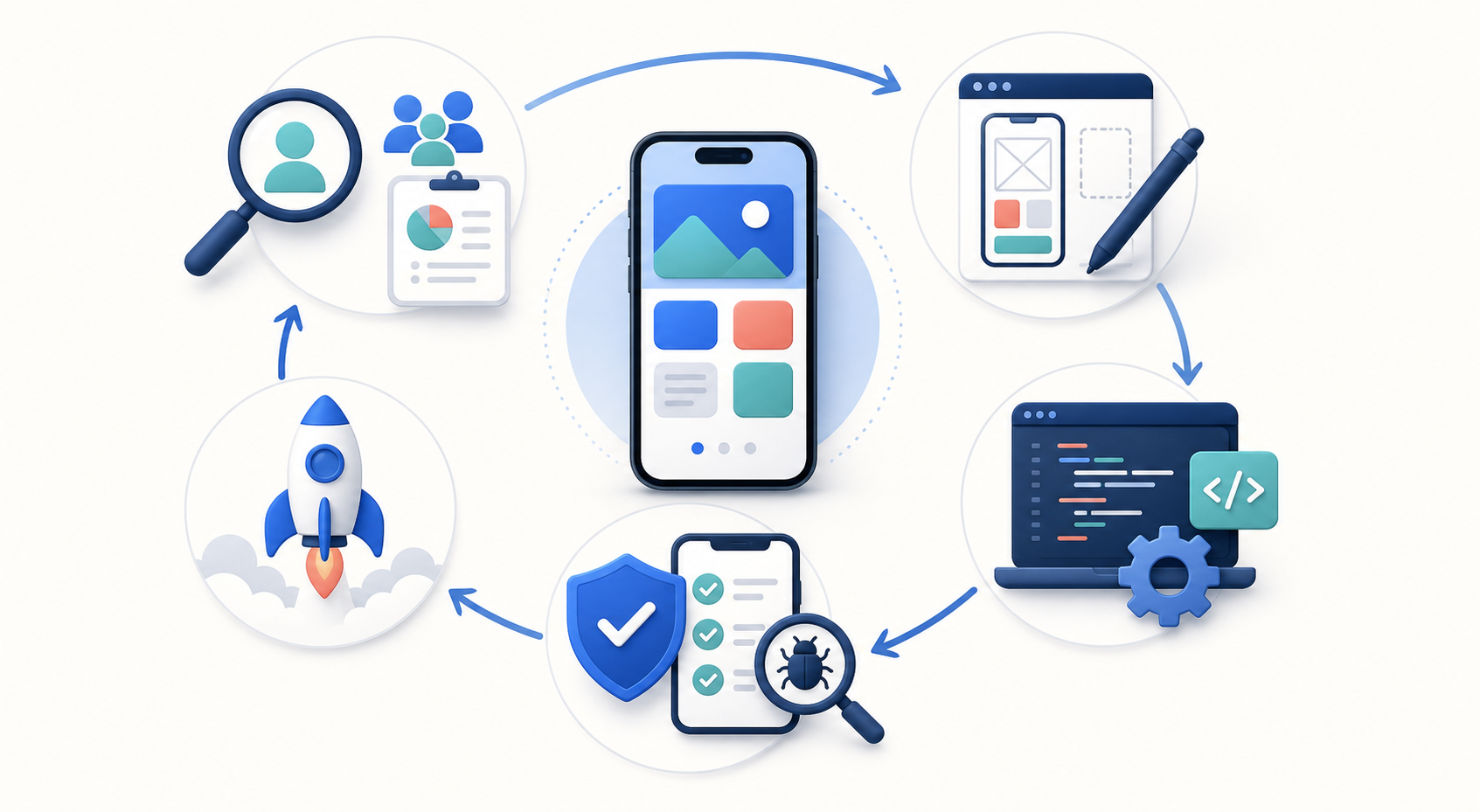
Mobile development is a continuous learning loop, not a straight line that ends on launch day.
Prepare for slow networks and imperfect conditions
Apps routinely depend on APIs, local data, and external services. Any request can time out, fail, or return unexpected data. The product needs caching, controlled retries, protection against duplicate actions, and messages people can understand. Where appropriate, tasks should work offline or synchronize when connectivity returns. A technical error should become practical guidance that tells the user what to do next.
Build in security and privacy from the beginning
Security cannot be added during the final week. The team must decide what data is truly necessary, where it is stored, and who may access it. Tokens and sensitive information need protection, while APIs must enforce authorization on the server. The OWASP MASVS is a useful external baseline for reviewing mobile security requirements. Requests for camera, location, or contacts should appear only when needed and with a clear explanation. Collecting less data often reduces risk while increasing trust. For distributed teams, the same principle extends into a hybrid work security framework that protects devices, access, and collaboration practices around the product.
Test the experience, not only the features
Unit tests protect logic, UI tests check interface behavior, and integration tests validate critical journeys. Automation, however, does not fully replace real devices. Screen sizes, operating-system versions, limited memory, keyboards, permissions, and network quality can expose issues that remain invisible on a developer machine. A strong strategy automates high-risk areas and maintains a practical checklist for every release.
Do not leave accessibility and localization until later
The product should support larger text, sufficient contrast, screen readers, and interactions that do not rely on color alone. For multiple markets, prepare the content structure early: avoid hard-coded copy and handle dates, currencies, and different text lengths correctly. Starting early makes the interface more flexible, keeps content consistent, and reduces the cost of future change.
Launch day begins a new learning cycle
Once the app reaches the store, the team should monitor crashes, response times, completion of key journeys, and support feedback. Analytics should answer specific product questions instead of recording every possible action. Releases should support limited rollouts and safe rollback when necessary. Quantitative data reveals what is happening; qualitative feedback explains why. Meaningful improvement comes from combining both.
Conclusion
A great app does not come from a perfect framework or one impressive feature. It emerges from consistent decisions: understanding the problem, controlling scope, designing for real conditions, protecting data, testing where risk matters, and learning after release. When product, design, engineering, and operations share the same goal, technology plays its proper role: turning a genuine need into an experience people can trust.