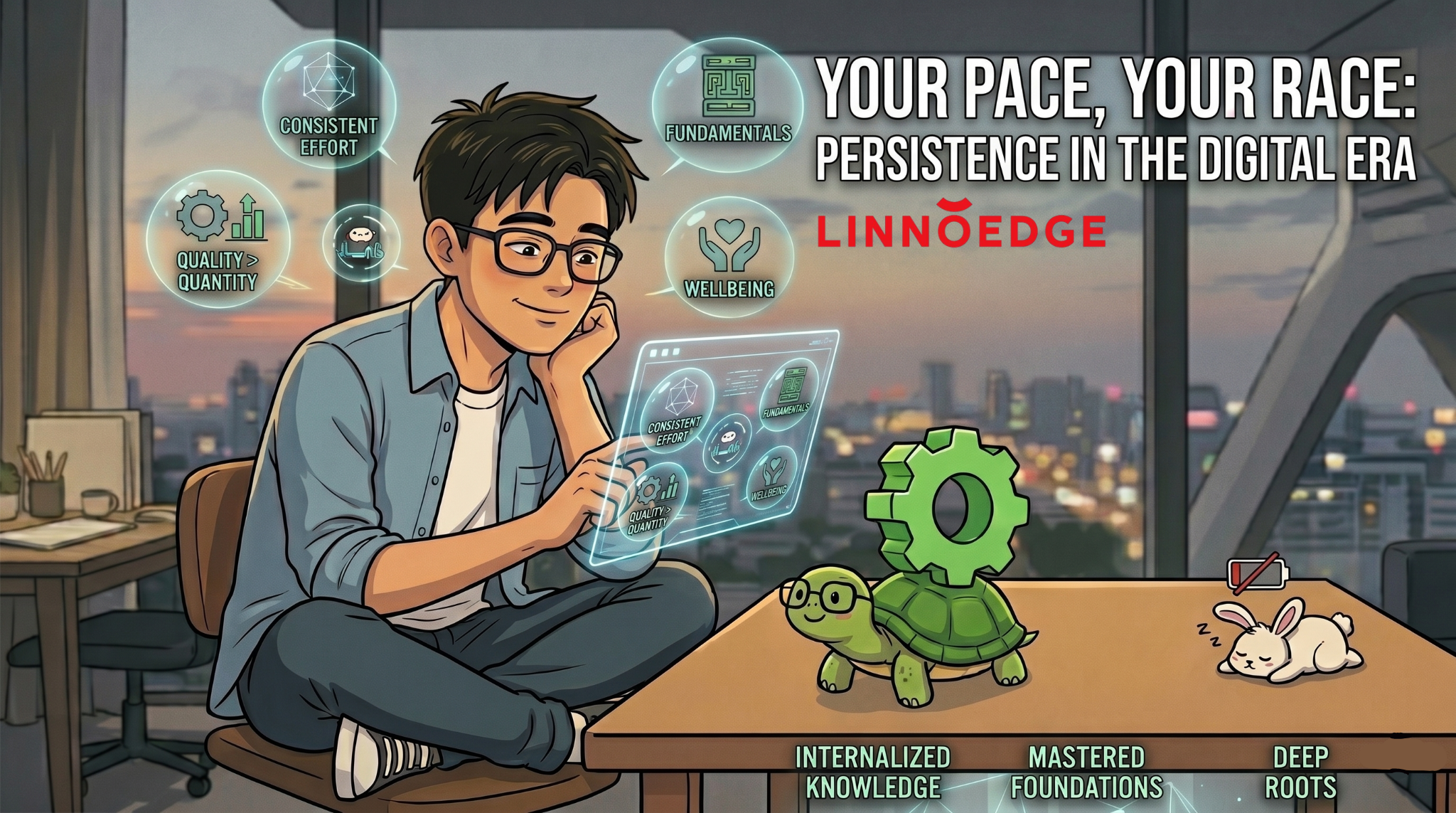
Introduction: The Storm of “Obsolescence”
In the world of engineering and technology, an invisible fear always looms: the fear of being left behind. With the explosion of AI, new frameworks launching every month, and technical processes shifting weekly, it is easy to feel “overwhelmed.”
Standing before this vast ocean of knowledge, we often ask ourselves: “Can I keep up with this world forever?”. If you feel like you are slowing down, don’t worry. In a career marathon, moving slowly isn’t failure—stopping is.

1. The Paradox of Speed in Technical Engineering
We often idolize those who seem to master new technology overnight. However, from a technical perspective, learning speed does not always correlate with execution quality.
- The Half-life of Knowledge: A programming library might only be trendy for 2 years, but Problem-Solving logic and Data Structures remain relevant for decades.
- Surface vs. Depth: Running too fast often leads to the trap of “knowing a little bit of everything but mastering nothing.” When a trend fades, those chasing it lose everything, while those who moved slowly and deeply keep their “foundational roots” to pivot successfully.

2. Persistence vs. Burst: The Battle of Two Habits
Within each of us, two opposing tendencies exist when facing new knowledge. Take a moment to see which habit is leading you:
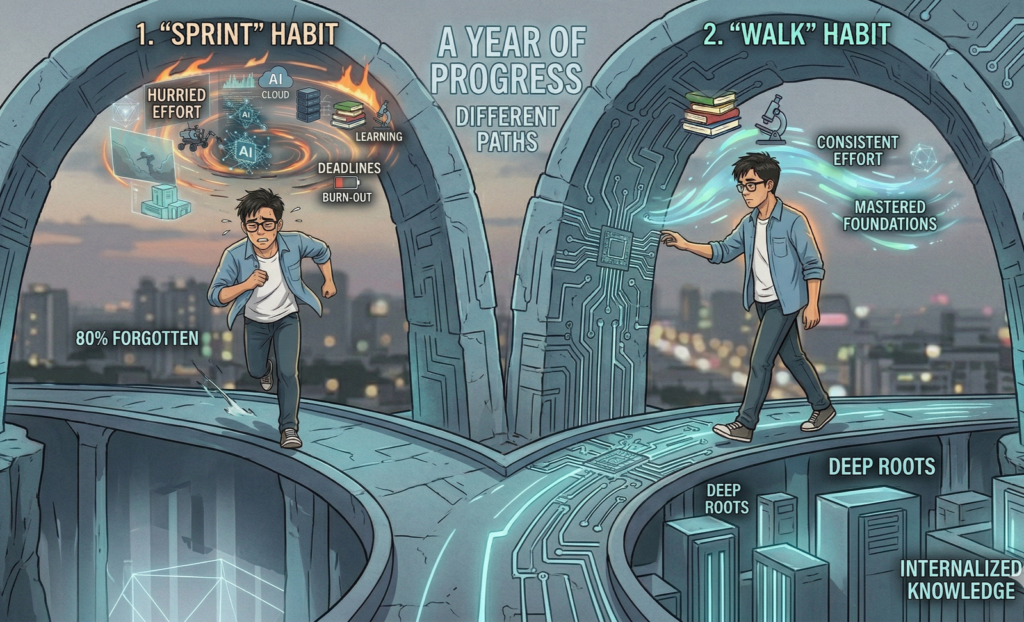
- The “Sprint” Habit: This happens during temporary excitement. You spend an entire weekend staying up all night to “crush” a new technology. The result? “Mental indigestion” and burnout. When the brain is overloaded, it triggers a shedding mechanism, causing you to forget 80% of what you learned within a month. This is the loop of “illusory effort”—it makes you tired but doesn’t move you forward.
- The “Walk” Habit: Instead of exhausting yourself in one go, you choose the discipline of just 30 minutes a day. You move slowly, understanding each small problem thoroughly. This doesn’t stress the nervous system; instead, it creates a “habit groove” in the brain, allowing knowledge to become instinct.
The Tipping Point: The “Walk” habit allows knowledge to internalize. After a year, those small “puzzle pieces” connect into a rock-solid foundation. When a difficult project suddenly hits, the “walkers” are the fastest to solve it because the knowledge is already a part of them.
3. Applying the “Slow Motion” Mindset to Work
In a professional environment, this mindset helps us build a more stable career:
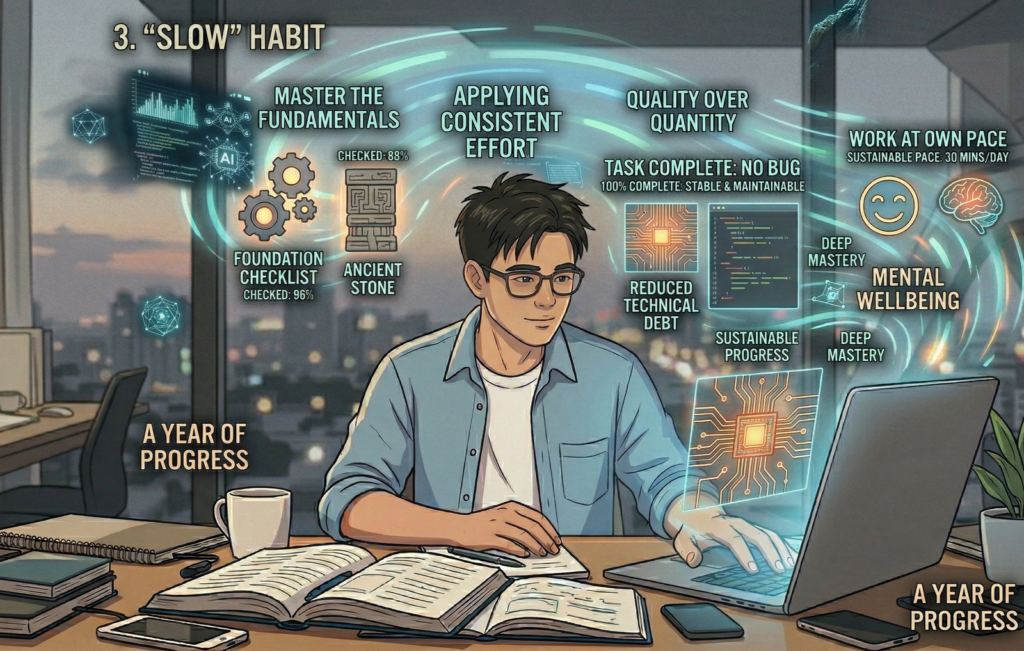
- Master the Fundamentals: Mastering the basics allows you to pick up new tools in days because you understand the underlying mechanics.
- Quality Over Quantity: A task done slowly but perfectly—with no bugs and clean documentation—is always more valuable than a rushed, sloppy job that creates “Technical Debt.”
- Mental Wellbeing: Accepting your own pace allows you to work with a creative and relaxed mind. We believe a happy, persistent employee brings more value than a “star” who burns bright and then burns out.
Conclusion: This Race is Yours Alone
We often look at other people’s “lanes” and feel pressured. But the growth of an expert requires time to “ripen.” At our company, consistent effort is valued far more than a moment of brilliance that fades away. Don’t be too hard on yourself if you don’t understand a new headline this morning. As long as you know a little more tonight than you did this morning, you are already winning.
Better to be a persistent turtle moving forward than a rabbit who sprints and collapses halfway.
👉 Your journey to mastering the fundamentals doesn’t have to be a solo race. Keep moving at your own pace and discover more valuable insights and resources across [Linnoedge].
We cover related ground in our AI integration playbook from Vietnam.

Truong BienTruong Bien
Senior Software Engineer · Linnoedge Inc. · LinkedIn↗
Fullstack Software Engineer passionate about coding and technology. In the fast-changing AI era, I focus on strengthening core thinking and technical foundations instead of chasing every trend.