
May 2012.
In Japan, the iPhone 4S had just been released.
In Vietnam, smartphones were still considered expensive, rare gadgets.
The Japanese IT industry was facing a major turning point.
In the early 2010s, Japan was in the middle of a mobile app development boom.
Everywhere in the field, people were saying:
“There aren’t enough engineers,” and “We can’t slow down our development speed.”
The traditional subcontracting model had reached its limit, and while innovative products were being launched one after another in the U.S., Japan’s development field had fallen into a dilemma — wanting to change but unable to.
Meanwhile, in Vietnam, a new movement was emerging. Encouraged by a four-year tax exemption policy for software companies, young engineers were striving to win their freedom through software development. Startups were being founded one after another, filled with passion to “create the future with our own hands.”
When I felt that striking contrast with Japan’s stagnation, I had a clear intuition:
“We can build a new way of system development here.”
I had always been drawn to the idea of working abroad, and that momentum pushed me to move to Ho Chi Minh City alone and start a company.
That was the beginning of Linnoedge Inc.
The “Vibrant Japan” I Saw in Vietnamese Engineers
The engineers I met in Ho Chi Minh City were all in their early twenties.
They were cheerful and straightforward, and their eyes shone with a strong spark of ambition.
“I want to master my skills.”
“I want to connect with the world and go overseas.”
“I want to make a real change with my own work.”
Hearing them speak reminded me of Japan in the 1980s and 1990s — an era when people devoted themselves to creating things, driven by a positive, boundless energy that didn’t always need logic to believe in the future.
Our Ho Chi Minh office started with just six people. Power outages happened once or twice a week. So our daily motto became “Command + S!” When someone shouted, “It’s coming!” everyone hit the save button at once — and laughter filled the office.
Once, on a release day, the office Wi-Fi suddenly stopped working. We all grabbed our laptops and moved to the first McDonald’s in Ho Chi Minh City late at night to finish the job.
It’s hard to imagine now, but in that chaos, a real sense of teamwork was born — a feeling that “we can overcome this together.”
From Giving Orders to Thinking Together
At first, things rarely went well.
“The message didn’t get across.”
“The design is off by two pixels.”
“The rework never ends.”
With different languages and cultures, the typical Japanese project management style simply didn’t work.
Then, one day, I realized something important.
A team isn’t moved by control — it’s moved by trust.
Instead of pointing out mistakes, we started thinking together: “How can we solve this?”. When explaining my intentions, I shared the full background — not just instructions. And when something went well, I said “AWESOME!” with all my heart.
These small changes slowly transformed the team’s atmosphere. Soon, members began offering their own ideas, and discussions started to grow naturally.
That was the beginning of our “co-creation” culture.
A Small Team Built a Culture
Years have passed, and our team has grown.
But the cheerful, positive spirit of those early days still remains.
Even with different languages and cultures, trust makes a team one.
And that experience continues to define what Linnoedge is today.
That was the beginning of Linnoedge Inc — a company built on what we now call our Vietnam-Japan co-creation development model.
Japan once faced a development bottleneck.
Today, we help companies break through it.
If you’re looking for more than subcontracting — let’s build your next system together.
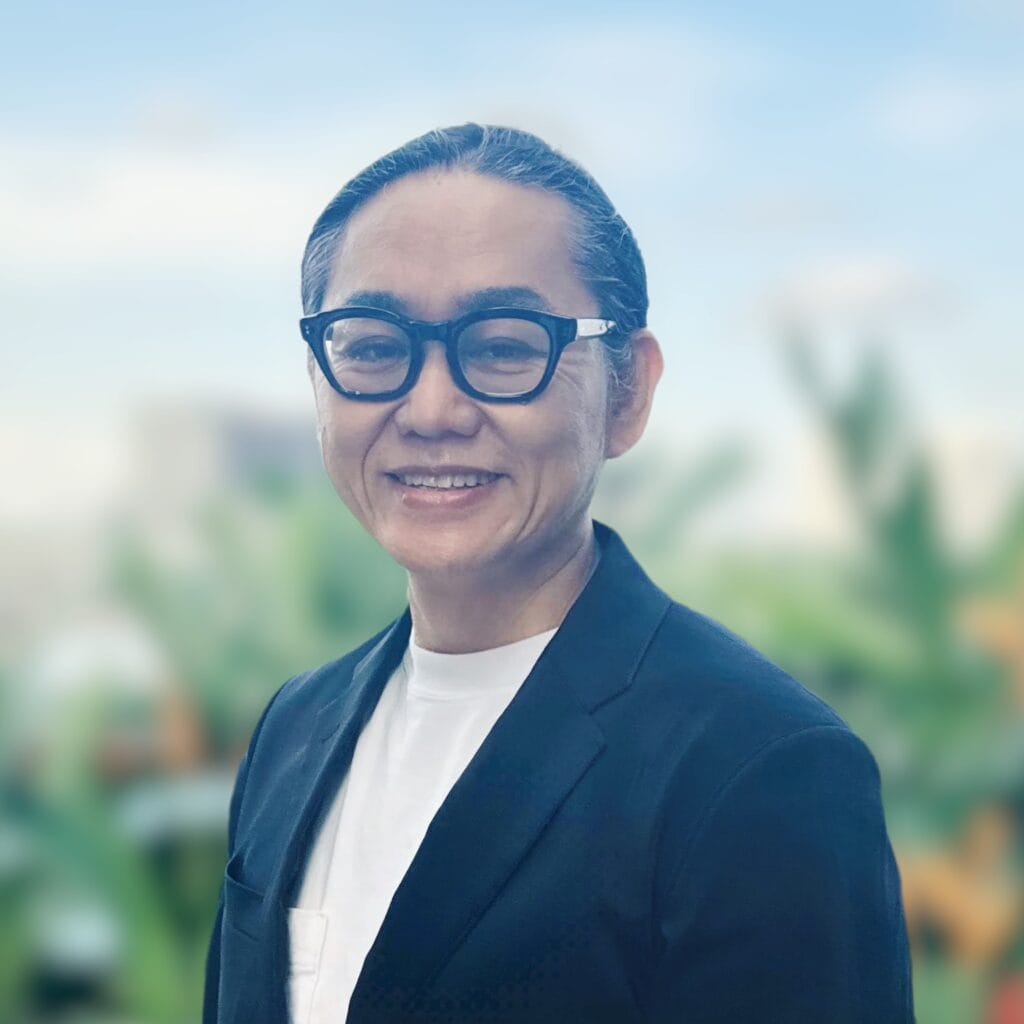
Author profile: Shogo Harada CEO of [Linnoedge] Inc. Operating IT offshore development and overseas expansion support businesses across two bases: Tokyo and Vietnam. A leader who believes in “Systems over Spirit,” structuring cross-border businesses that often tend to be opaque. Committed to providing “reproducible quality” to organizations and clients rather than relying solely on individual skills.