
In many software development teams, especially in the early stages or when facing tight deadlines, software testing is often viewed as a “nice-to-have” task rather than a necessity. The common mindset is: as long as the feature works, the demo goes smoothly, and the client isn’t complaining — that’s good enough.
However, did you know that saving a few hours on writing tests today could burn thousands of dollars tomorrow? As a project begins to expand, the team size grows, and requirements constantly change, testing is no longer “optional.” It officially becomes a matter of survival that determines the stability of the entire system.
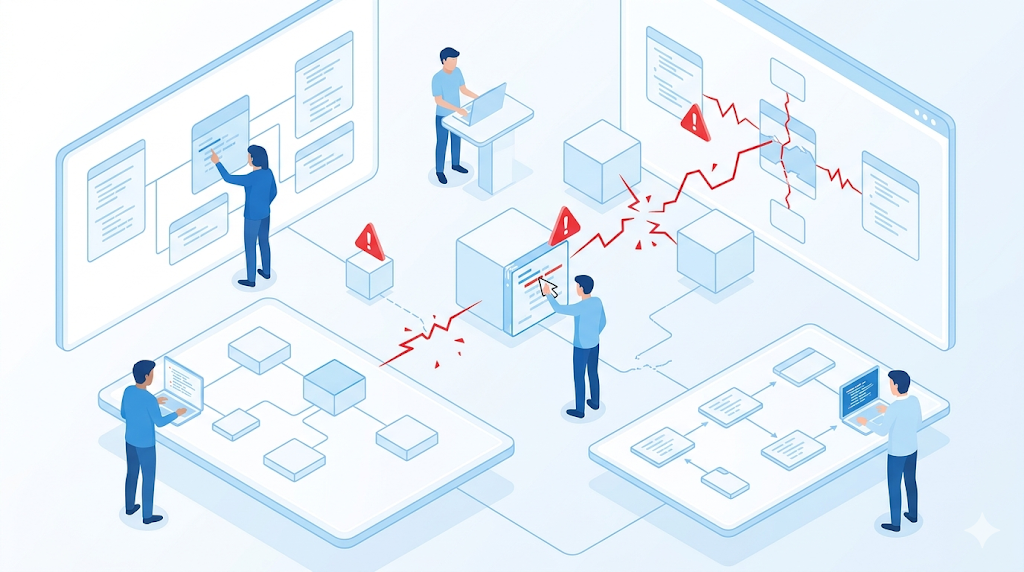
The Reality: Testing – The “Forgotten” Step When Chasing Deadlines
In small projects with few modules and a handful of contributors, the absence of clear testing scenarios might not cause immediate disasters. Developers can easily manage the logic flow they wrote themselves.
But when the project starts to scale, we face a cascade of challenges: multiple developers working on the same codebase, overlapping new features, continuous release cycles, and rapidly changing client requirements. At this point, tweaking a single line of code in one module can completely break the logic elsewhere without anyone noticing, directly impacting the end-user experience.
The most dangerous part is the blind spot: No one in the team truly knows if the current system is “safe” enough to deploy.
The Real Value: Software Testing is Not Just for “Catching Bugs”
A widespread misconception is that “Writing tests is just to find bugs.” This is true, but it doesn’t capture the full scope of software testing’s importance. In the Software Development Life Cycle (SDLC), the greatest value of writing Unit Tests or Integration Tests lies not in solving present issues, but in protecting the project’s future. Specifically:
- Preventing Regression Bugs: Ensuring that old bugs, once fixed, will never reappear when new features are added.
- Ensuring System Stability: Keeping the system running smoothly amidst continuous changes in business logic.
- Building Team Confidence: Creating a safety net that allows developers to freely innovate and optimize code.
Confident Refactoring and Codebase Protection
One of the biggest consequences of a lack of testing is that developers become terrified of touching old code. “Refactoring” becomes a forbidden zone, and technical debt (Tech debt) piles up day by day. Every deployment becomes a nerve-wracking event: the team is afraid to make mistakes, fixing one bug spawns another, and countless hours are wasted on repetitive manual testing.
Conversely, with good test coverage, the codebase can easily “evolve” over time. Releases become smooth and predictable, and developers can boldly optimize the system with absolute confidence.
4 Reasons Why Testing is Vital for Large-Scale Projects
1. Controlling Risks When Scaling the System
You can ship code incredibly fast without tests during the MVP (Minimum Viable Product) stage. But you cannot scale a system serving millions of users without a testing safety net. Tests are the brakes that allow your machine to run at top speed without crashing off the track.
2. The Cost Problem: Writing Tests is an Investment, Not a Liability
Many argue that “Writing tests is time-consuming and slows down the project.” This might be true in the first few sprints, but it is a massive misconception in the long run.
According to a well-known study by the Systems Sciences Institute at IBM, the cost to fix a bug found after product release is up to 15 times higher than finding it during the design phase, and can be 100 times higher than during the maintenance phase.
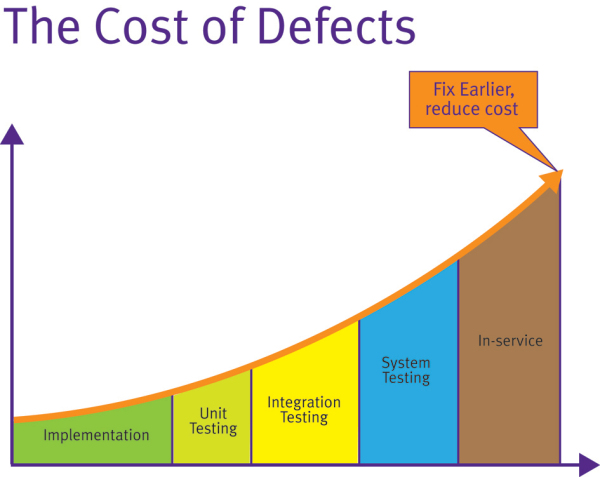
Skipping tests allows bugs to slip into Production, leading to astronomical fixing costs, business disruptions, and wasted resources on manual testing. Therefore, investing in testing is the cheapest way to optimize long-term costs.
3. A Common Language for Teamwork (Especially in Offshore Models)
In today’s practical work environments, especially in remote or offshore projects, teams are often scattered across different geographical locations, time zones, and expertise levels. Here, testing (especially Automation Testing) acts as a “common language”:
- New developers (during onboarding) can read test cases to quickly understand the system’s flow.
- The QA/QC team has a solid basis to verify software quality through CI/CD pipelines.
- Project Managers (PM) can press the release button with total peace of mind.
4. Upgrading Developers’ Architectural Mindset (Clean Code)
An interesting fact: Teams with a strong testing culture usually maintain a high-quality codebase.
The reason is simple: To write effective tests (code that is easy to mock and assert), developers are forced to design clearer code, adhere to SOLID principles, logically separate concerns, and minimize complex dependencies. The result is a Clean Code architecture that is easy to maintain and scale. Testing doesn’t just improve the product; it upgrades the architectural mindset of the software engineers themselves.
Conclusion
Software testing is not a “nice-to-have” step. It is the core foundation for a software project to grow sustainably over the long term. If lines of code are a company’s assets, then the Testing suite is the ultimate “insurance policy” for those assets. It delivers the most critical, yet intangible value in the IT industry: Trust — from clients, from the company, and from the development team itself.
💻 Grow Your Software Engineering Career with Linnoedge
Are you a Developer who values code quality and aspires to build sustainably scalable systems?
At Linnoedge, we believe testing is more than just a task in Jira — it is a symbol of Engineering Excellence. We are dedicated to building products with a vision of long-term quality, combining modern development practices with real-world battlefield experience.
👉 [Contact Linnoedge today] to discover how we can grow together and build breakthrough software!
We cover related ground in the way we build mobile apps in production.
For how we run this as an offshore team, see offshore development.
Related reading
Want a team that works like this?
This is how our engineers in Ho Chi Minh City actually work. If you’re weighing offshore development in Vietnam, I do a free 15-minute call — no sales deck, just working out what actually matters for your specific project.
Book a 15-minute call →
Thong NguyenThong Nguyen
Fullstack Developer · Linnoedge Inc.
Web Developer at Linnoedge, focused on building clean, user-friendly websites and improving digital experiences.