What really matters when you are just starting out
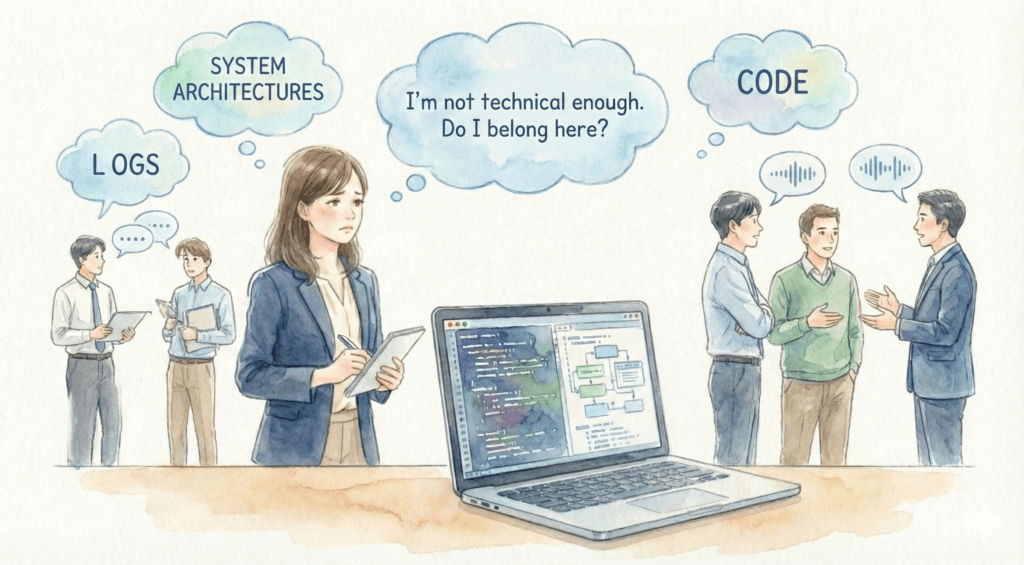
When I first stepped into a role related to IT leadership, I carried a quiet fear with me:
“I’m not technical enough. Maybe I don’t belong here.”
Around me were engineers who spoke fluently in system architectures, logs, and code.
I, on the other hand, often found myself asking for clarification, translating technical explanations into business terms, and worrying that my lack of deep technical knowledge would eventually be exposed.
If you are new to IT or ITD and have ever felt the same anxiety, this article is for you.
What does ITD mean in this article?
ITD refers to an IT Director.
An IT Director acts as the bridge between development teams and customers.
Our role is to listen carefully to what customers truly want, then translate those expectations into clear, actionable requirements that developers can understand and deliver.
At the same time, an IT Director must also explain technical constraints, risks, and decisions back to customers, using honest and simple language.
An IT Director does not need to be the most technical person in the room. The real responsibility is to connect people, technology, and trust.
A real situation that changed my perspective
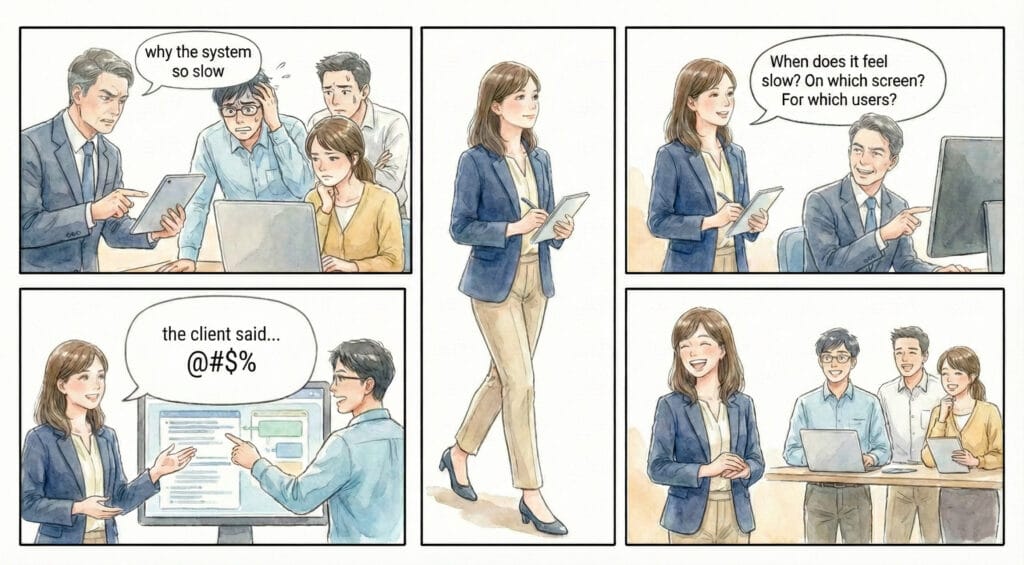
In one project, a client reported that “the system is slow” and assumed it was an IT issue.
Developers checked the system and found no obvious errors.
QA could not reproduce the problem.
Tension grew quickly.
From the outside, it looked like IT was slow or unresponsive.
From the inside, the IT team felt misunderstood and unfairly blamed.
I was not the most technical person in the room, but I asked a simple, non-technical question:
“When does it feel slow? On which screen? For which users?”
That question changed the conversation.
We discovered the issue occurred only:
- during peak hours
- for users handling large datasets
- within an older feature that had not been revisited in a long time.
The problem was not technology alone.
It was a gap in communication.
That moment taught me something essential:
An ITD does not need to know everything technically.
An ITD needs to connect technology with real-world usage.
Actually, IT is not as intimidating as it looks
Many people new to IT believe the job is all about:
- servers
- code
- and complex systems.
But at its core, IT exists to do very human things:
- protect data
- keep work running smoothly
- and prevent disruption before it happens.
IT is like the electrical system of a building.
You do not need to understand every wire—but when it fails, everything stops.
Understanding why IT matters is often more important than knowing how it is built.
Why IT often “needs more time”
One of the most common frustrations I hear is:
“Why does IT always take so long?”
From an IT perspective:
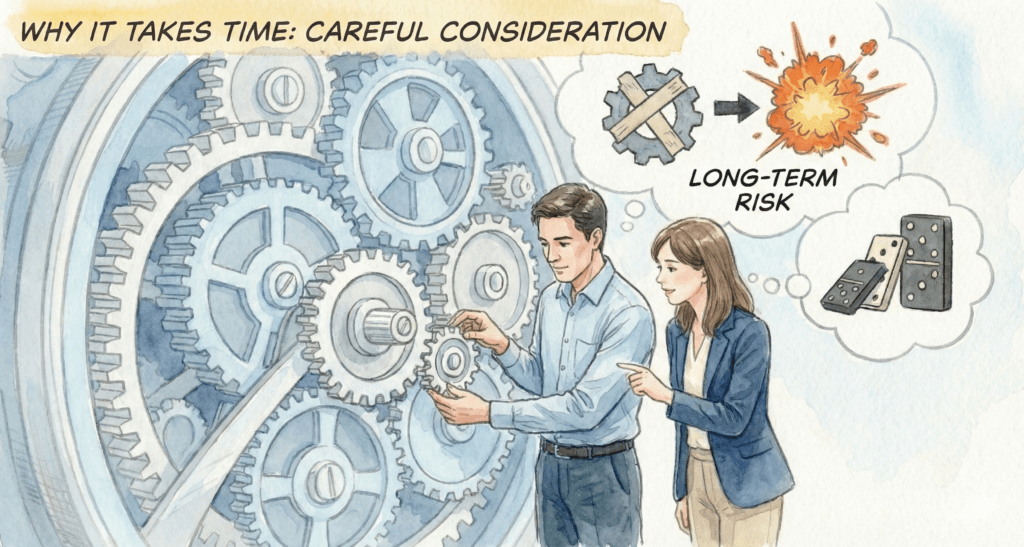
- a small change can affect multiple systems,
- a rushed fix can create long-term risk,
- and a wrong decision can cost far more later.
IT is not slow by nature.
IT is careful because it sees risks that are invisible to others.
When this perspective is shared clearly, conversations shift:
- fewer “Why is this so difficult?”
- fewer “IT is blocking progress”
- more collaboration and trust.
IT Is not just fixing problems — It is preventing collapse
Most of IT’s value is invisible.
When systems run smoothly, no one notices.
When data is safe, it feels natural.
When nothing breaks, it is taken for granted.
But behind the scenes, IT is:
- preventing failures before they happen,
- managing risks no one talks about,
- choosing stability over speed when it matters.
Often, the greatest success of IT is the incident that never occurred.
The responsibility of an ITD goes beyond being “correct”

As an ITD, I have learned that technical correctness alone is not enough.
Our responsibility also includes:
- explaining decisions in plain language,
- helping non-IT stakeholders understand risks,
- and building trust through transparency.
Doing the right thing technically is important.
Helping others understand why it is right is what creates alignment.
A Message to those new to IT or ITD
If you are worried because:
- you do not have strong technical knowledge yet,
- you feel overwhelmed by terminology,
- or you are unsure how to speak confidently with engineers,
please know this:
IT leadership is not about knowing everything.
It is about asking the right questions, listening carefully, and communicating clearly.
These skills can be learned.
And they are just as critical as technical expertise.
Closing thoughts
IT is not separate from people or business.
It exists to support them.
When IT and non-IT teams speak the same language, work becomes lighter, decisions become stronger, and organizations become more resilient.
This article is a small step toward that shared understanding—and a reminder that you do not need to be fearless or fully technical to grow into an effective ITD.
Building a resilient organization starts with the right communication. If you need IT leadership and solutions that truly understand your business goals, we are here to help.
Let’s talk! Contact our team here: