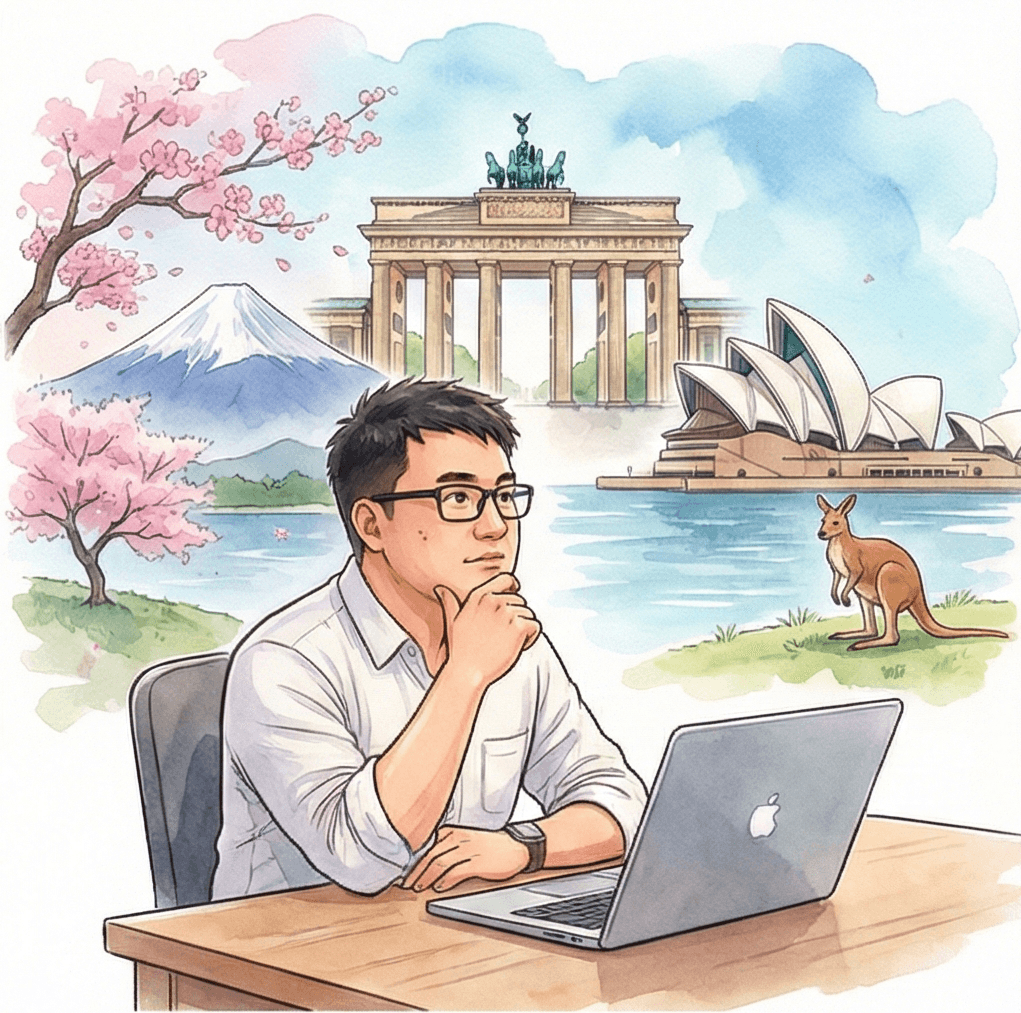
We often think that to experience different cultures, we need to pack a suitcase and buy a plane ticket. But my journey has been different. While I’ve remained based here in Vietnam, my career has taken me across the globe. By working for companies from Japan, Germany, and Australia, I’ve had a front-row seat to the world’s most distinct working styles.
Each of these companies brought their own “flavor” to my daily life in Vietnam. I didn’t just learn how to do my job; I learned how to think like a global citizen. Instead of choosing just one way to work, I’ve spent my career reflecting on how to blend the best of all three.
Here are four reflections on what it’s like to work for the world, right from my home country.
1. Decision making: The art of the “slow Yes” and the “fast Go”
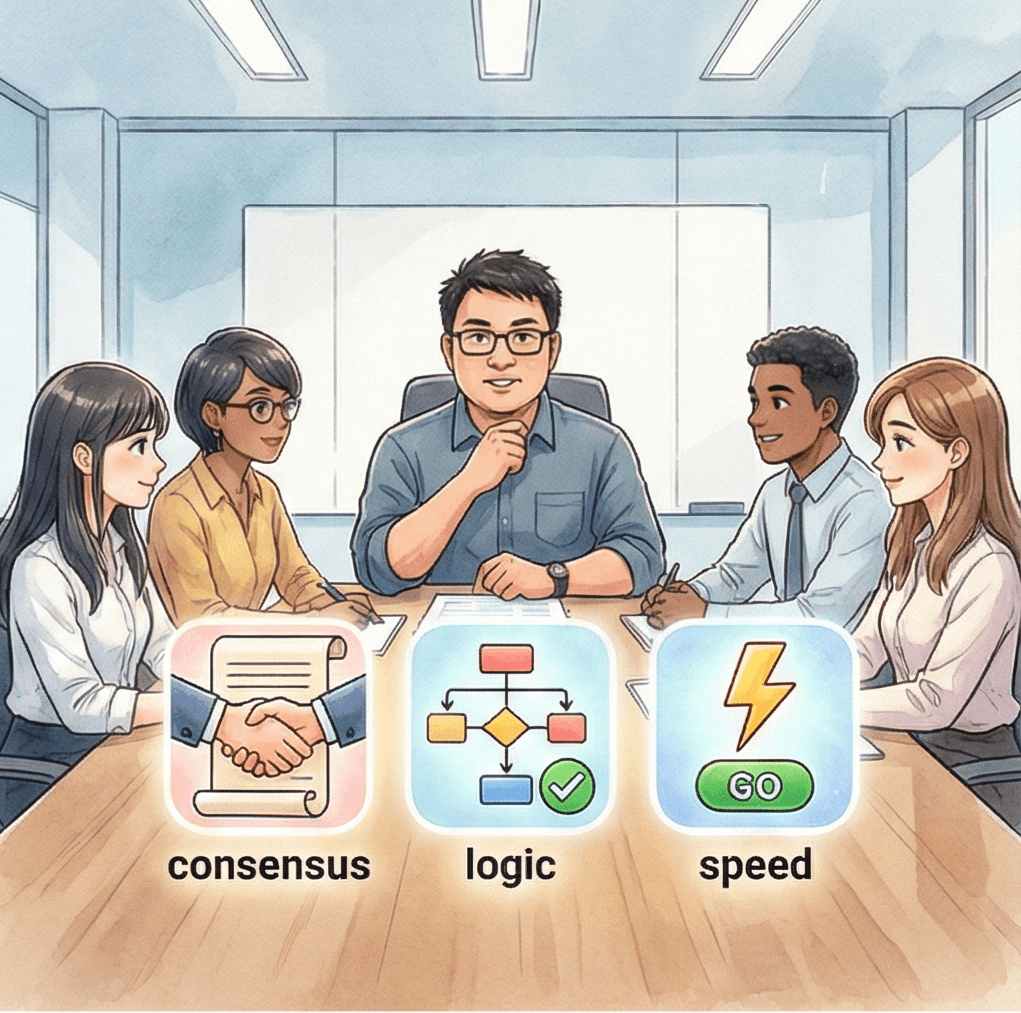
Even while working in Vietnam, the way decisions were made in my office changed depending on which flag was flying over the company.
In my time with Japanese firms, I learned about Nemawashi. Even in our local branch, big decisions weren’t made during the meeting—they were made before the meeting through quiet, respectful conversations. It taught me that harmony is often just as important as the result itself.
When I worked for a German company, the “silent consensus” disappeared. My German colleagues valued clarity above all else. If an idea was flawed, it was discussed openly and logically. There was no “reading between the lines”—just a focus on the most efficient path forward.
Then came the Australians. Working with an Aussie team felt like a breath of fresh air. They were the masters of “having a go.” Their decision-making wasn’t about perfect consensus or perfect logic; it was about momentum. They’d rather try an idea quickly and fix it later than spend weeks talking about it.
- My reflection: I’ve learned that the best approach is a mix. I use Australian speed to test new ideas, German logic to ensure they are solid, and Japanese consensus to make sure the whole team is moving together happily.
2. The Clock: Finding the balance in a global time zone
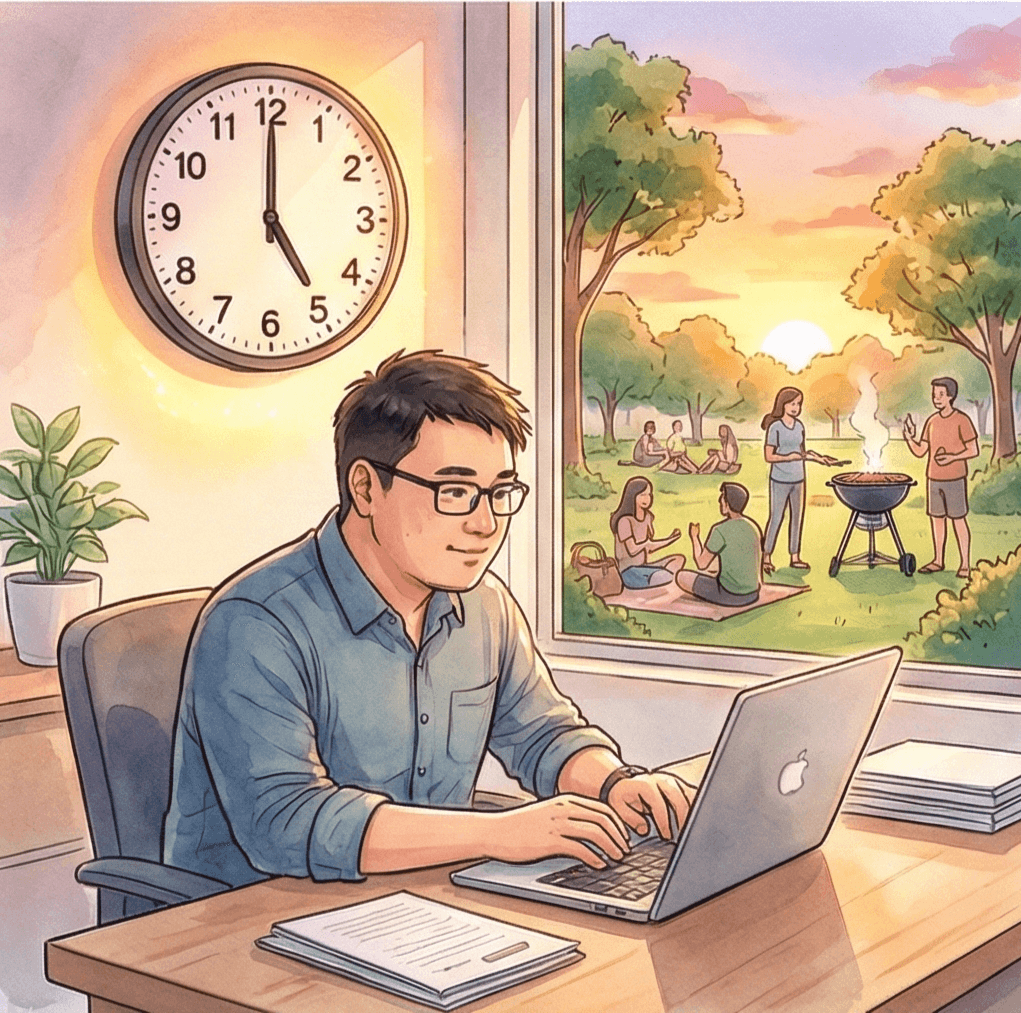
Working for foreign companies while living in Vietnam creates an interesting challenge with time.
In Japanese culture, I saw a deep respect for “presence.” There was a feeling that being available and working hard alongside your team was the ultimate sign of loyalty. It taught me about diligence and the “we are in this together” spirit.
In German culture, the focus shifted from “hours spent” to “results achieved.” My German managers didn’t care if I was at my desk at 8:00 PM; they cared if my work was perfect and delivered on time. They taught me the “Focus Block”—working with 100% intensity during the day so I could enjoy my personal life the moment the laptop closed.
Australia took it a step further. They taught me that a person who is well-rested and has a life outside of work is actually a better employee. They brought a sense of “no worries” to the schedule, prioritizing mental well-being alongside productivity.
- My reflection: I now use German focus during my working hours so I can protect my Australian-style work-life balance, all while maintaining the Japanese reputation for never letting my team down.
3. Communication: High context vs. High directness
Communication was perhaps the steepest learning curve.
In the Japanese environment, I learned to “read the air.” In Vietnam, we are also a high-context culture, so I felt a natural connection to this. It’s about being subtle, polite, and making sure no one loses “face.”
Germany was a total reset. There is a beautiful honesty in the way Germans communicate. If something is wrong, they say it. This directness saved so much time! I realized that you can be blunt without being rude, as long as the focus is on the work, not the person.
Australia added the “mate” factor. Working for an Aussie company meant the hierarchy felt very flat. You could joke with your boss or challenge an idea over a coffee. It made the workplace feel like a community of equals.
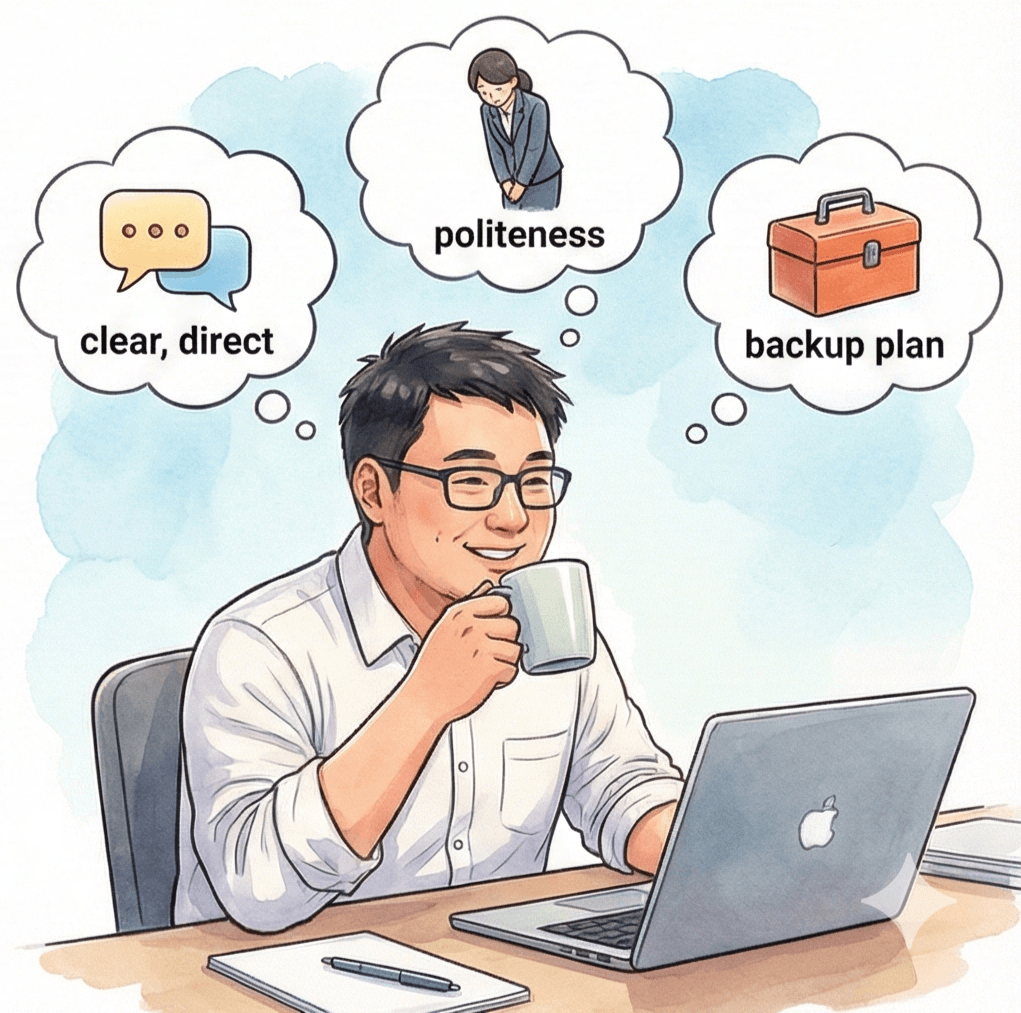
- My reflection: Today, I try to communicate with German clarity (so everyone understands the goal), wrapped in Japanese politeness (to show respect), and delivered with Australian friendliness (to make work enjoyable).
4. Quality: The Craft, the System, and the Shortcut
Finally, each country taught me a different definition of “good work.”
Japan gave me the spirit of Kaizen—the obsession with small, daily improvements. It’s about taking pride in the smallest details of a report or a line of code.
Germany taught me to value “The System.” They don’t just want one good result; they want a process that guarantees quality every single time. It’s about building a machine that doesn’t break.
Australia brought in resourcefulness. When a problem arose that the “system” couldn’t fix, my Aussie colleagues were the first to find a creative, “outside the box” shortcut to get the job done.
- My reflection: I aim to build my projects with German systems, refine them with Japanese care, but always keep an Australian backup plan in case things get messy.
Conclusion: The best of all worlds, right here in Vietnam
Working for companies from Japan, Germany, and Australia while staying in Vietnam has been the greatest education of my life. I’ve realized that I don’t have to pick just one culture.
By being a hybrid professional, I can be as reliable as a Japanese craftsman, as efficient as a German engineer, and as adaptable as an Australian entrepreneur.
We live in a world where borders are disappearing in the digital space. You don’t need to move to a new country to grow; you just need to move your mindset. I’m proud to be a bridge between these cultures, bringing the best of the world to my work every day.
Are you looking for a partner who combines Japanese meticulousness, German systematic thinking, and Australian creative agility? Let our global working mindset drive your next project to success. 🤝 Connect with our team of experts today:
Adjacent thread: an offshore team built around the same people, not a rotating bench. Closer to the operational side, see how that looks here.
Related reading
A 15-minute free conversation
If a “faces visible” model of offshore development sounds interesting, I run a fifteen-minute conversation. It isn’t a comparison-table conversation — it’s working out together what actually matters for your specific project.
Book a 15-minute call →
Dang NguyenDang Nguyen
CTO · Linnoedge Inc. · LinkedIn↗
Tech Leader with 15 yrs in IT. Leading with a ‘what is right, not who’ mindset to deliver exceptional, client-first solutions.